|
Carrosserie
|
Sedan
|

|
Transmission
|
Manual
|

|
Couleur extérieure
|
Bronze
|

|
Tapisserie
|
Leatherette
|

|
Direction
|
Lhd
|
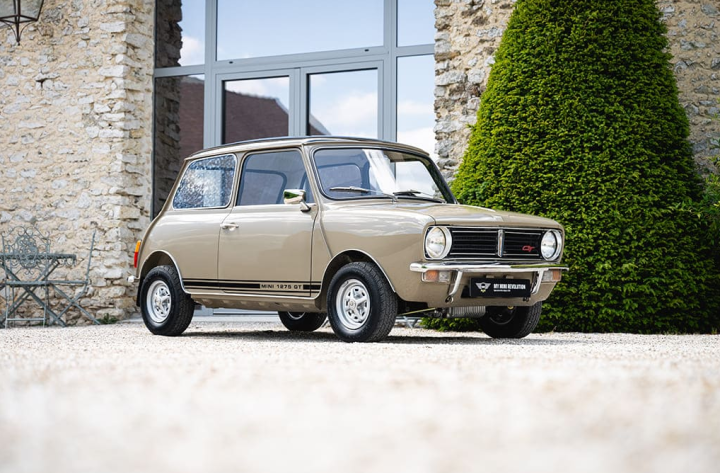
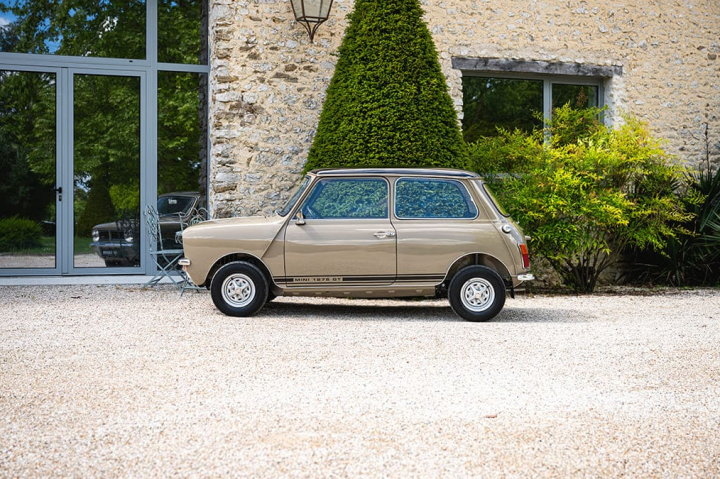
January 1971. Under the British Leyland era, one of the very first Morris Mini 1275 GTs of this generation was born!
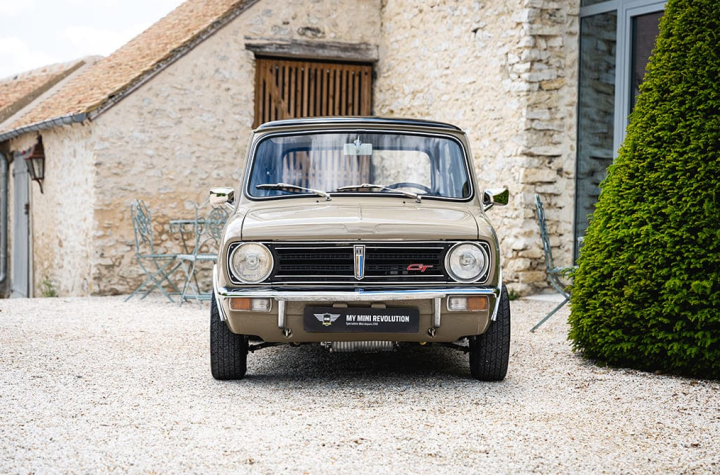
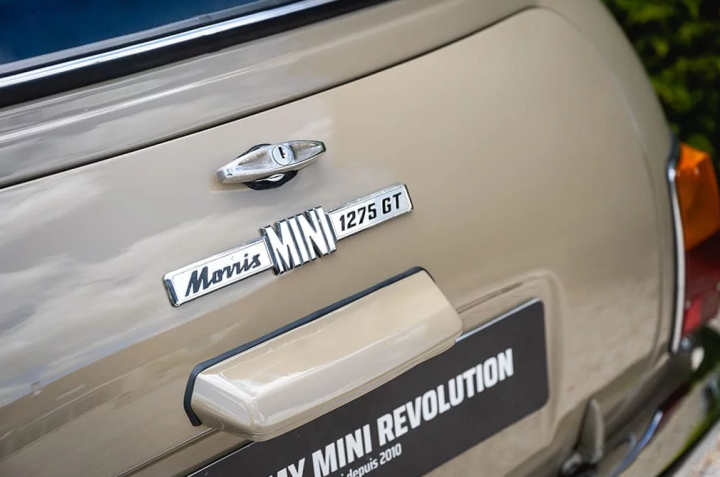
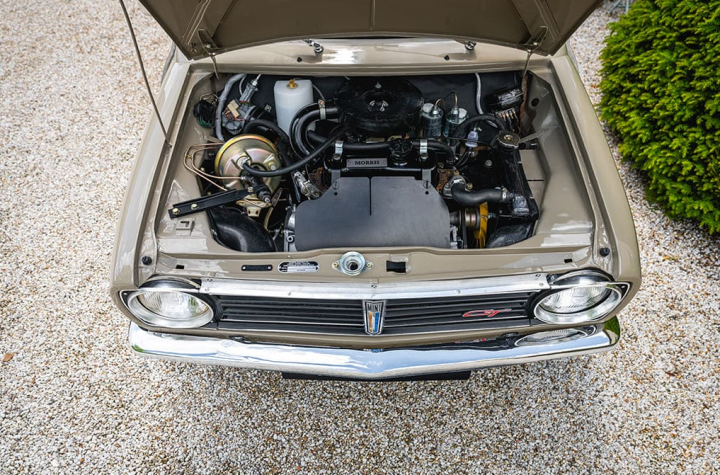
The Morris badge deserves a closer look, because it reveals something about the era. When British Leyland took over the British brands at the turn of the 70s, it ran its production lines in parallel, badged the same Austin or Morris cars depending on the production line. Essentially, the mechanics were the same. But the badge itself bears a period signature that connoisseurs immediately recognize and that discerning collectors seek out with patience.
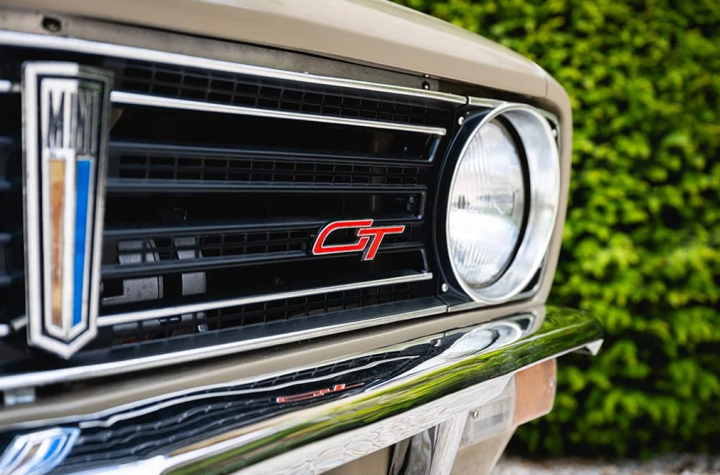
The 1275 GT, when it arrived on the market, caused controversy. Some purists criticized it for breaking with the round and organic lines of the historic Mini: the more angular nose, the black grille, a silhouette that betrayed the influence of 70s design on a bodywork born ten years earlier.
British Leyland wanted a Mini that was in tune with the times, differentiated enough to justify its own commercial identity, and modern enough to appeal to a new generation of buyers.
Time has largely proven them right.
Today, the 1275 GT is unanimously recognized as one of the most desirable Minis of the entire British Leyland period, driven by its 1275 cc engine, its Remote gearbox mounted on a round tunnel which the very first examples benefited from, and its original hydrolastic suspension which gives it this particular behavior, supple and communicative at the same time.
Mechanically, the 1275 GT doesn't pretend to be a Cooper S, and that's precisely where part of its charm lies. It develops slightly less power, but it comes with a smoothness of operation and reliability that make it a very enjoyable car.
Under the hood, everything is consistent with the rest of the car. You can immediately see that this car has been restored with the same care as every other square inch of the bodywork.
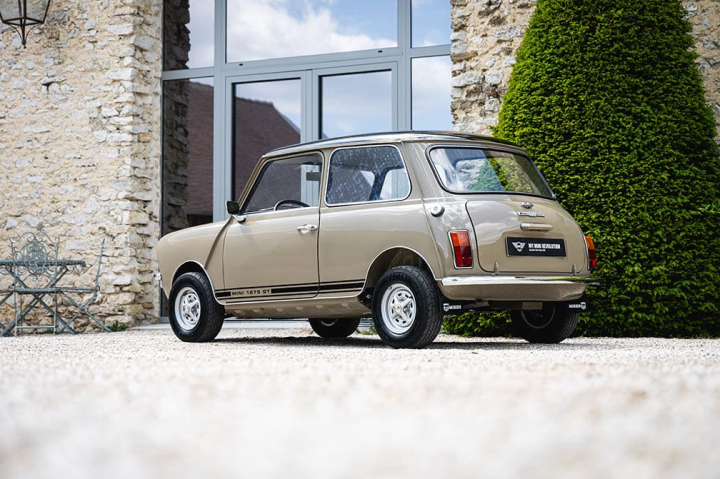
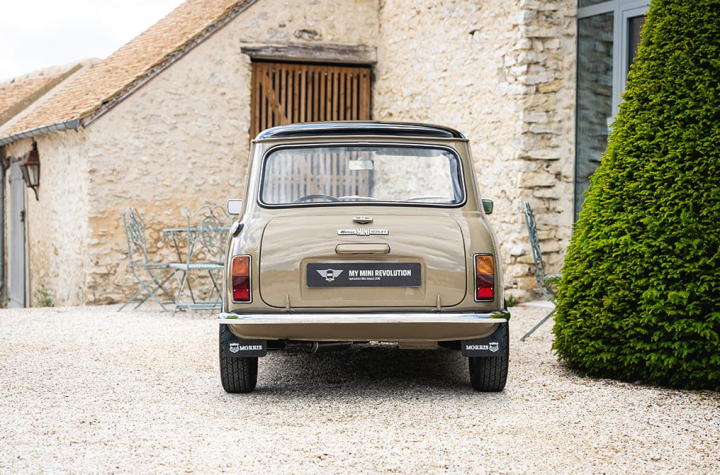
Because this 1275 GT was completely restored from the bare chassis up, without exception and without shortcuts. Everything was disassembled, each sheet of metal inspected with uncompromising rigor, the areas that needed it were cut out and re-welded with a precision that only craftsmen who truly love what they do are capable of achieving, the whole thing was rebuilt in absolute respect for the original configuration.
Fifty years after its birth, it appears in a state that commands respect and admiration, and testifies to what can be achieved by a workshop that refuses to compromise on standards.
The Antelope Beige color combined with the black roof creates a combination of rare elegance on a Mini of this generation.
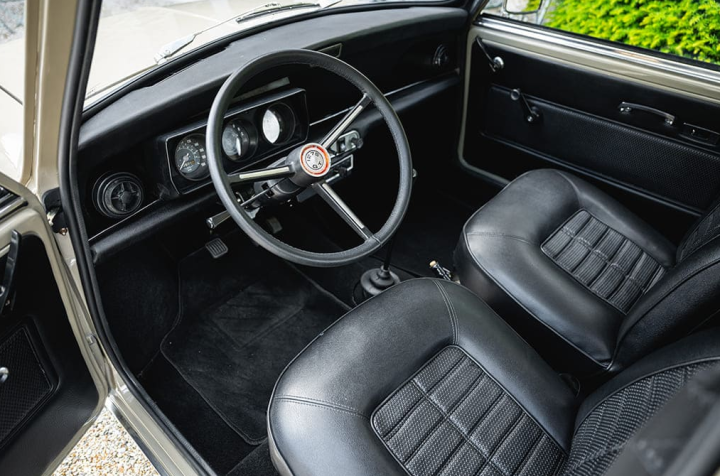
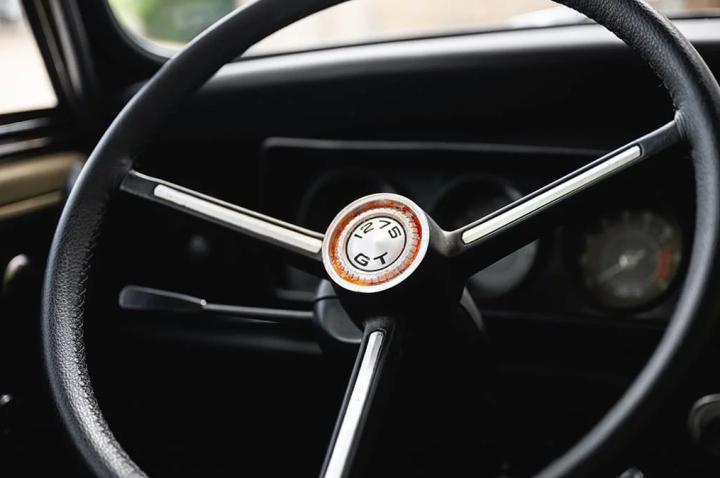
Inside, the interior is in truly remarkable condition, flawless and without a single flaw. The black upholstery is superb in its workmanship, the Smiths triple-gauge instrument panel is perfectly in place with its speedometer, tachometer, and combined fuel-temperature gauge. The toggle switches, the dashboard, the gear lever on its characteristic round tunnel of the early 1275 GTs—everything exudes an authenticity that hasty restorations never quite manage to recapture.
A rare and remarkable car that will delight any Mini enthusiast. A truly uncommon collector's item!
Prix sur demande